
How Do I Assign Hotel Housekeeping Rooms Fairly When Suites Take Longer to Clean?
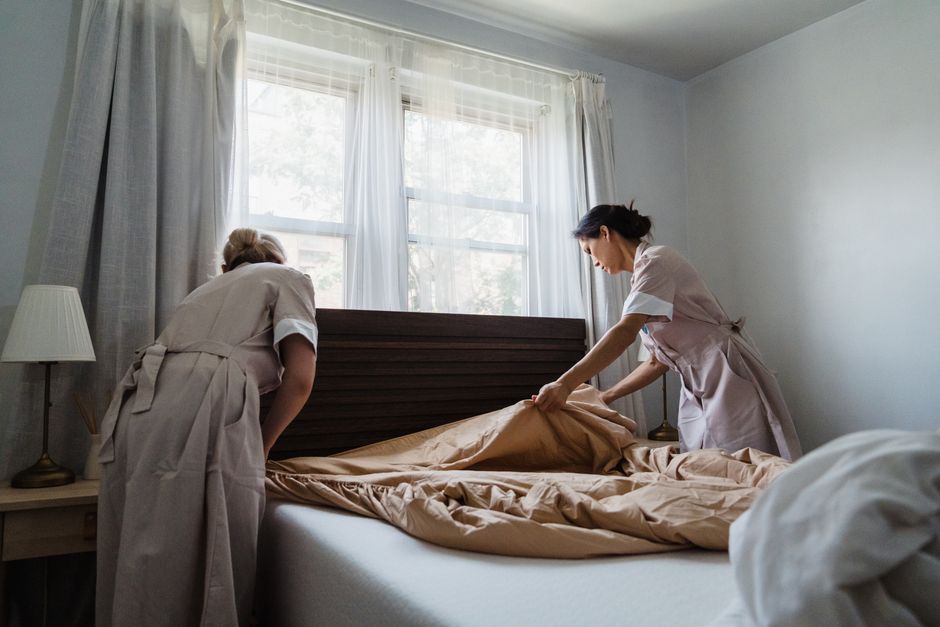
Assign rooms by weighted cleaning value, not by an equal room count. Give each task a value based on room type and cleaning type, set a maximum total for each attendant, then review both total values and room counts before releasing assignments. That prevents a suite-heavy or checkout-heavy board from looking fair on paper while creating a much longer shift in practice.
How do I assign housekeeping rooms fairly when suites take longer to clean?
Assign each attendant to a comparable total of cleaning value, then check the room mix. A fixed room count is a blunt instrument: it treats a standard stayover and a suite checkout as if they create the same work. They do not.
A 2021 stopwatch study in a 74-room, four-star hotel found that both room category and cleaning type were statistically significant drivers of cleaning time. Standard-room stayovers averaged 14.79 minutes, while standard-room checkouts averaged 19.66 minutes; suite stayovers averaged 18.16 minutes and suite checkouts averaged 26.59 minutes. The authors concluded that assigning a specific number of rooms is not necessarily the best way to organize housekeeping work.
Use a simple daily board review before releasing tasks. Start with the day's departures, stayovers, suites, and known added work. Convert each item into a value, distribute the heavier values across the available attendants, and only then look at the room count. The goal is not identical boards. The goal is comparable effort.
| Assignment check | What to compare | Manager action |
|---|---|---|
| Room type | Standard rooms versus suites | Give suites a higher value than comparable standard-room work. |
| Cleaning type | Stayovers versus checkouts | Give checkout work a higher value where local timing supports it. |
| Added effort | Travel, special requests, facility work, inventory work | Add a value adjustment instead of hiding the work in an equal room count. |
| Final board | Total values and room counts | Move a high-value task before the shift starts when one board is materially heavier. |
Use the timing evidence as the reason for the change, not as a universal point scale. The two research settings report different cleaning times: the 2021 hotel study averaged 15.24 minutes for stayovers and 20.35 minutes for checkouts across its observed categories, while an Embry-Riddle Aeronautical University dissertation reported 39.12 minutes for checkout rooms and 14.485 minutes for service rooms at its studied hotel. Your property needs its own values because layout, service standards, and task definitions affect the workload.
What are housekeeping cleaning credits or cleaning values?
Housekeeping cleaning credits are units of effort used to balance work by difficulty rather than by room count. Think of them as a common language for a board: instead of saying, "Each person has ten rooms," you can say, "Each person has a similar total workload."
HotelKey describes cleaning values as a way to balance attendant boards using values versus room counts. Its documented example gives a king checkout a value of 1.00, a king stayover 0.5, a queen-suite checkout 2.00, and a queen-suite stayover 0.5. Those are system examples, not a mandatory formula, but they show the operating logic: values should reflect the work your team actually has to complete.
Build your first version with a short rule set. Assign a base value for a standard stayover, then increase it for a checkout and for room categories that consistently require more work. Add separate values for non-room work that consumes time. Oracle OPERA Cloud supports room-level credits, facility-task credits, and rules that multiply a room credit by a task weight. Its advanced rules can account for travel, special requests, miscellaneous work, inventory items, and facility tasks.
This is the two-limit rule: use a maximum number of rooms and a maximum value total. A board can fail either test. Eight rooms may be too much if several are high-value departures; a modest value total may still need a room-count ceiling to keep task handling practical. Infor HMS documents both controls, allowing managers to set separate maximum rooms per housekeeper and points per housekeeper.
When comparing software, ask a direct question: "Can the system show room count and total workload for every attendant before assignments are finalized?" That question keeps the evaluation focused on the decision your team must make each morning. It follows the same practical vendor-selection habit used in Which Affiliate Platform Should I Choose as an Established Creator?: define the operating constraint first, then judge whether the tool exposes the data needed to manage it.
Should stayovers and checkout rooms count as the same workload?
No. Treat stayovers and checkout rooms as separate workload categories because the available evidence shows they can require sharply different amounts of time. Equal treatment creates a hidden workload gap and makes a board look balanced when it is not.
The 2021 hotel time study found average checkout work took 20.35 minutes across observed categories, compared with 15.24 minutes for stayover work. In the Embry-Riddle research, the gap was larger: checkout cleaning averaged 39.12 minutes compared with 14.485 minutes for service rooms. The exact difference varies by hotel, but both sources point in the same direction: forecast staffing and assignments from the mix of checkout and stayover work, not total occupied rooms alone.
Run this daily workflow:
- Forecast the work. Pull departures, stayovers, room categories, and known extra tasks before assignments begin. Oracle's housekeeping forecast can summarize expected tasks, occupancy, arrivals, stayovers, departures, and related supply needs.
- Apply values. Attach your approved credits to each task, including location or special-work adjustments where your system supports them.
- Set limits first. Decide the maximum value and maximum room count for each available attendant before the system or manager distributes rooms.
- Inspect exceptions. Sort boards by total value, then scan for too many suites, too many departures, or a concentration of added tasks.
- Record the mismatch. If a board ran long, identify whether the value was wrong, an added task was missing, or the staffing level could not cover the forecast.
This matters more when staffing is constrained. In the American Hotel & Lodging Association's May 2024 survey of 456 hoteliers, 76% reported a staffing shortage, 13% said they were severely understaffed, and housekeeping was the top hiring need for 50% of respondents. Better assignment logic does not create extra staff. It does stop a limited team from absorbing avoidable imbalance.
Track two measures after each shift: assigned value per attendant and the difference between assigned value and the work that actually remained or required reassignment. Do not use the data to turn every minute into a disciplinary issue. Use it to improve the values, surface recurring task load, and make the next day's board more credible.
Frequently Asked Questions
Can hotel housekeeping software automatically balance room assignments?
Yes. Documented tools from Oracle, Infor, and HotelKey can distribute work using credits or points rather than room count alone. Automation still needs manager-defined values and maximum limits; the software can balance only the workload rules it has been given.
How do I set a maximum workload for each housekeeper?
Set a maximum cleaning-value total before assignments are made, then keep a separate room-count maximum as a guardrail. Infor HMS documents separate limits for rooms per housekeeper and points per housekeeper, including decimal point values, so a manager can control both volume and effort.
How can I prevent one attendant from receiving all the difficult rooms?
Review each board for its mix of checkout rooms, suites, and added tasks, not only its room count. Spread high-value tasks across attendants and use point adjustments for location or extra work; HotelKey's assignment summary and Oracle's credit-based task sheets are designed to make that imbalance visible.
Run one audit this week: print or export a completed assignment board, label every checkout, suite, and added task, and ask one question: "Would these boards still look fair if room count were removed?" If the answer is no, revise the values before the next morning's assignments.
Sources
- Journal of Industrial Engineering and Management
- Embry-Riddle Aeronautical University Scholarly Commons
- American Hotel & Lodging Association
- Oracle Hospitality OPERA Cloud Task Sheets Documentation
- Infor Hospitality Management Solution Documentation
- HotelKey Knowledge Base
- Oracle Hospitality OPERA Cloud Forecasting Documentation