
How Do I Choose Living Room Window Coverings for Daylight, TV Glare, and Privacy?
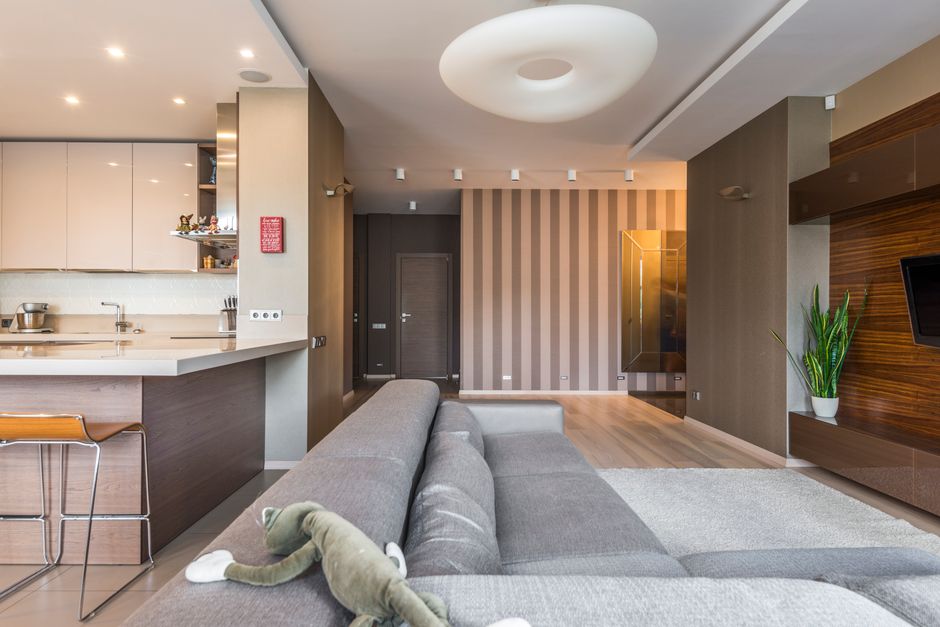
Choose a layered setup rather than asking one covering to solve every problem: use a light-filtering shade or adjustable blind for daytime glare and daylight, then add an opaque layer for nighttime privacy. Cellular shades suit homes that also need insulation; roller shades offer a simpler light-to-blackout choice. Match the system to the window's exposure, screen position, and street visibility before choosing fabric or color.
Are sheer curtains enough for privacy in a living room at night?
No. Sheer curtains are a daylight and view tool, not a complete nighttime privacy plan. The practical issue is contrast: when the room is lit after dark and outdoors is darker, the interior becomes the more visible side of the glass.
That distinction matters because privacy, daylighting, glare reduction, views, solar heat gain, and nighttime heat loss are separate selection goals, not one checkbox. The Pacific Northwest National Laboratory Building America guide specifically treats nighttime privacy and daylighting as distinct goals, particularly for street-facing windows and windows with east or west exposure.
Use the two-shift system. During the day, keep a sheer or other light-filtering layer in place if you want diffuse light and a softer view. At night, close an opaque shade or draw lined drapery. This is less about making the room complicated and more about giving each layer one clear job.
Sheer shades can be excellent at daylighting, glare control, and preserving views, according to the same PNNL guide. But a fabric shade's performance for visual privacy is its own criterion. A controlled study from the New Jersey Institute of Technology found fabric shades were preferred for visual privacy, while also showing that glare, view quality, and privacy should be evaluated separately. Do not treat a bright daytime result as proof that the setup will work at 9 p.m.
Should I choose curtains or blinds for my living room?
Choose curtains when you need a secondary opaque layer and a softer, more enclosing treatment; choose blinds when frequent adjustment of glare, daylight, and view is the daily job. The strongest answer for many living rooms is not either-or. It is a blind or shade for precise daytime control plus curtains or drapes for nighttime coverage.
Here is the decision in working terms: a television facing a bright window needs a treatment you can adjust without blacking out the whole room. A street-facing room needs a layer you can fully close after dark. A room with uncomfortable window-area drafts or heat concerns may benefit from cellular construction.
| Covering type | Best fit | Trade-off to plan for |
|---|---|---|
| Sheer shade or curtain | Diffuse daylight, glare control, and view preservation | Add an opaque layer for reliable nighttime privacy |
| Venetian blind | Frequent adjustment of sunlight, view, and glare | Thermal performance is modest |
| Roller shade | A straightforward choice between light-filtering and blackout models | Choose the fabric deliberately; the result changes with the model |
| Cellular shade | Daylight, privacy, glare control, and added insulation | Confirm the model's light-filtering or blackout behavior |
| Heavier floor-length drapery | Nighttime coverage and stronger thermal performance | Closing it reduces view, daylight, and adjustability |
The Efficient Window Coverings guidance makes the split clear. Venetian blinds have especially strong adjustability because their slats can be tilted to block most sunlight or opened to maximize light transmission. Roller shades come in many fabrics and weaves; opaque versions can darken the room and provide full privacy. Heavier floor-length drapes perform better thermally than conventional shades or blinds, but they give up daylight and view when closed.
Cellular shades deserve a separate look when the window is doing more than throwing light. The U.S. Department of Energy says cellular shades can filter glare, provide privacy, reduce nighttime heat loss, minimize cold drafts, and reduce unwanted solar heat gain because their cells trap air. In a modeled study spanning 15 climate zones, the fact sheet reports savings of up to 20% on heating energy and up to 15% on total heating-and-cooling energy compared with no shades. That is a useful reason to consider them, not a promise that every living room will receive the same result.
Measure Before You Order
Do the measuring work before debating trim, texture, or color. Public sources provided here do not prescribe universal rod height, panel width, or clearance numbers, so do not invent a rule and force every window into it. Instead, make the order fit the operating needs of your room.
- Map the obstruction. Note the television position, speaker locations, furniture backs, handles, radiators, and anything that could block a shade or curtain panel.
- Choose the treatment path. Decide whether the product must sit inside the opening, outside the opening, or on a rod. Check that the chosen path does not interfere with opening windows or doors.
- Record the usable width and height. Measure the actual opening and the surrounding wall area where hardware and panels must sit. Treat each window separately, especially in a large bank of windows.
- Test the closed position on paper. Confirm that the opaque layer can cover the glass area you need covered at night, and that the daytime layer can still operate independently.
- Check clearance before installation. Make sure the rod, brackets, shade cassette, and panels can move without hitting trim, handles, or nearby furniture.
How can I stop TV glare without making the room dark?
Stop TV glare by blocking or redirecting direct sun at the window while keeping diffuse light available, not by defaulting to a blackout room. Start with a light-filtering attachment, then use adjustability to keep sunlight off the screen during the hours that matter.
PNNL states that light-filtering window attachments can allow diffuse natural light while reducing the harsh glare of direct sunlight. That is the right target: reduce the direct beam, retain useful ambient light. Positioning still matters. A treatment cannot compensate for a screen placed where direct sun strikes it for long periods, so assess the screen and window together.
Run this glare drill before ordering. At the times you normally watch television, identify which window sends direct light toward the screen. Then decide what must move: a blind's slat angle, a roller shade's height, a cellular shade's position, or the screen itself. The goal is a repeatable setting, not a room that must stay closed all day.
Weak setup: “Close everything whenever the TV is on.”
Stronger setup: “Use the light-filtering layer for direct sun; close the opaque layer only when privacy or full darkening is needed.”
Blinds are the better fit when you need to fine-tune the light angle several times a day. Light-filtering roller, pleated, or cellular shades are the cleaner fit when you want a consistent softened-light setting. PNNL notes that roller and pleated shades can provide either diffuse daylight or blackout depending on the model, so read the actual product specification instead of assuming the category tells you everything.
If heat is also part of the problem, do not confuse glare control with thermal control. The DOE-supported materials distinguish the functions: blinds can block some solar radiation but offer limited insulation, while cellular shades use trapped air to support insulating performance. Choose the performance problem first, then choose the mechanism that solves it.
Frequently Asked Questions
What window covering gives privacy but still lets in daylight?
A light-filtering cellular, roller, pleated, or sheer shade can admit diffuse daylight while reducing direct sun and providing daytime screening. For dependable privacy after dark, pair that daytime layer with an opaque shade, drapery, or blackout-capable roller shade. The best choice depends on whether your priority is view preservation, adjustable glare control, or insulation.
Do I need both curtains and blinds in a living room?
You need both only when one layer cannot meet the room's competing needs. A layered system is practical for street-facing, east-facing, or west-facing rooms that need daylight and TV glare control by day, then stronger privacy at night. Use the shade or blind for daily adjustment and the curtain or drapery as the privacy and light-blocking backup.