
How Do I Store Coffee Mugs in a Small Kitchen?
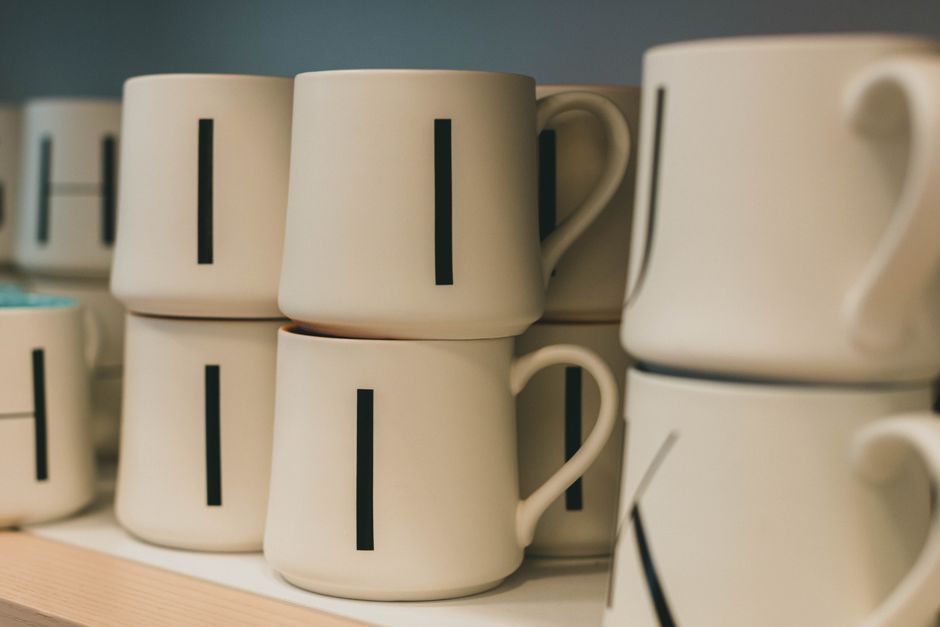
Store everyday mugs in one easy-to-reach zone near the coffee maker, keep that zone one row deep, and use vertical or divided storage only where it improves access. Put damaged mugs out of regular use, move occasional or sentimental mugs elsewhere, and choose hooks, risers, drawers, or cabinet-door storage based on the constraint you actually have—not the organizer that looks clever online.
What is the best way to store mugs in a small kitchen?
The best method is a two-zone system: a small daily set at the point of first use and a separate reserve for everything else. The University of Illinois Small Homes Council makes the governing rule plain: “Store items at the point of first use.” For mugs, that usually means the cabinet, drawer, or rail closest to the coffee maker.
Start with the constraint, then choose the storage tool. A shallow wall cabinet works well for mugs because they can sit in a visible row. A deep cabinet needs a front-row/back-row plan. A rental kitchen with no wall space needs a cabinet, drawer, or door-based solution. The point is not to display every mug. The point is to remove the daily coffee routine from the cabinet shuffle.
| Kitchen constraint | Best storage move | What to avoid |
|---|---|---|
| Shallow cabinet | One visible row of daily mugs; add a shelf riser only if it creates a clear second level. | Stacking mismatched mugs where handles catch. |
| Deep cabinet | Keep daily mugs at the front and reserve mugs behind them, with clear reach space. | Making the back row part of the everyday routine. |
| No wall space or rental | Use a drawer divider, cabinet shelf riser, or inside-door storage that does not require drilling. | Buying a freestanding mug tree that consumes scarce counter space. |
| Coffee station | Keep the routinely used mugs closest to the maker and relocate extras. | Turning the counter into permanent mug storage. |
Run the Access Test: choose a mug from the middle without moving two others. If that cannot happen, the arrangement is storing objects, not supporting use. The Illinois guidance calls for room around stored items so those behind the first row remain reachable; it also recommends step-up shelves and racks when they improve shelf access.
Accessibility is the deciding factor, especially in a shared household. A peer-reviewed Collegium Antropologicum study identifies 800 to 1,100 mm from the floor as the optimal storage zone and reports reduced visibility and accessibility at 1,400 to 1,700 mm. Put the daily set in the easiest zone available. Put display pieces and infrequent mugs higher up, not the other way around.
How do I organize coffee mugs in a deep cabinet?
Organize a deep cabinet with a working front row and a clearly limited reserve behind it. Do not let every mug compete for front-row status. The daily set belongs at the cabinet edge; seasonal, guest, or sentimental mugs belong behind it only if you can reach them without unloading the shelf.
Use the Front-Row Rule: the mugs used most should occupy one row, handles facing the direction that makes them easy to grasp. This gives every cup a defined exit path and reduces the chance of knocking one into another. The University of Illinois study specifically advises keeping frequently used items on a top shelf only one row deep and notes that dishes suit shelves approximately 12 inches deep.
For a cabinet deeper than that, make the second row a reserve rather than a mystery pile. Group reserve mugs by role: guests, seasonal use, and sentimental keepsakes. That is more useful than grouping by color, because it tells you when each mug should return to active storage.
- Empty the cabinet. Separate routine-use mugs from guest, seasonal, sentimental, damaged, and uncertain mugs.
- Build the daily row first. Give those mugs the most accessible shelf or the front edge of the shelf.
- Create a reserve boundary. Use the rear section only for mugs that do not need daily access; a riser can help if it makes both levels visible and reachable.
- Move heavy, awkward, or rarely used pieces out of the reach zone. A decorative oversized mug may be worth keeping, but it does not earn a daily-use position.
If the cabinet is low and difficult to see into, a divided drawer is often the stronger replacement. The Illinois guidance says drawers are more accessible than shelves for most base-cabinet storage. That does not mean every mug belongs in a drawer. It means a drawer with dividers can beat a crowded low shelf when bending, searching, and lifting are the daily costs.
The ergonomic stakes are real. A 2024 Scientific Reports study of kitchen-item retrieval found upper-cabinet retrieval more difficult than lower-cabinet retrieval for older adults, partly because cabinet construction obstructed sightlines. It also found that neck, trunk, and knee movements significantly affected participants during retrieval. Keep routine mugs where the intended user can see and grasp them without repeated reaching, crouching, or blind searching.
Can I hang mugs under cabinets without drilling?
Yes, you can use a no-drill hanging solution under a cabinet if it holds the mugs securely and leaves enough clearance for removal, but it should serve a small active set rather than the whole collection. The useful version is a compact coffee-station tool. The cluttered version is a row of handles that catches elbows and turns the counter edge into a traffic hazard.
Before adding hooks, run a simple fit check: open the cabinet door fully, remove one mug without dragging it across another, and confirm that the mugs do not interfere with the coffee maker or prep space. If any of those fail, use a drawer divider or a shelf-based plan instead. No-drill hooks are a constraint-specific answer, not a default upgrade.
Pegboards and wall rails face the same test. They can keep a small collection visible, but visibility is not the same as usability. Use them when wall space is genuinely available and the mugs are in the easy-reach zone. Avoid placing routine mugs high above the counter simply because the wall is empty; the accessible space is more valuable than the decorative space.
Declutter before you install anything: Real Simple quotes professional organizer Briana Spruille: “When you get to a point of seeking additional areas to store your mugs, it is time to declutter.” Keep the mugs routinely reached for, plus the pieces with a defined seasonal, guest, or sentimental role. The rest are consuming the exact access your small kitchen cannot spare.
Damaged mugs are not candidates for clever storage. The U.S. Consumer Product Safety Commission recall of certain IKEA mugs warned that brittle tableware could break and allow hot liquid to leak, creating a burn hazard. A chip, crack, or visible degradation changes the assignment: remove that mug from regular-use storage rather than placing it back in rotation.
Frequently Asked Questions
How many coffee mugs should I keep?
Keep the mugs your household routinely reaches for in the everyday zone, then separate seasonal, guest, inherited, and sentimental pieces from that working set. The University of Illinois study treated dinnerware needs as variable because entertaining habits, breakage, gifts, and inherited sets differ widely. If you need to create extra everyday storage simply to hold all of the mugs, that is a practical signal to edit the collection.
How do I store mugs so they do not chip or topple?
Give each mug a stable position with space to grasp the handle, rather than tightly nesting or stacking unlike shapes. Keep the most-used shelf one row deep, and use risers, dividers, or hooks only when they prevent mugs from pressing into one another. Remove chipped, cracked, or visibly degraded mugs from regular use; the CPSC warns that brittle, breaking mugs holding hot liquid can create a burn hazard.
Should mugs be stored near the coffee maker?
Yes, store the everyday set near the coffee maker when that is where the mugs are first used. The University of Illinois storage guidance is direct: store items at their point of first use. Keep the area limited to the mugs used most often, then place extras in a secondary cabinet or drawer so the coffee zone remains easy to reach.
This week’s drill: take every mug out of its current home, choose the daily set first, and assign every remaining mug a specific role: reserve, guest, seasonal, sentimental, or out of regular use. If a mug has no role, it does not need the premium real estate near the coffee maker.