
How Can I Make a Modern Living Room Feel Warm and Inviting Without Clutter?
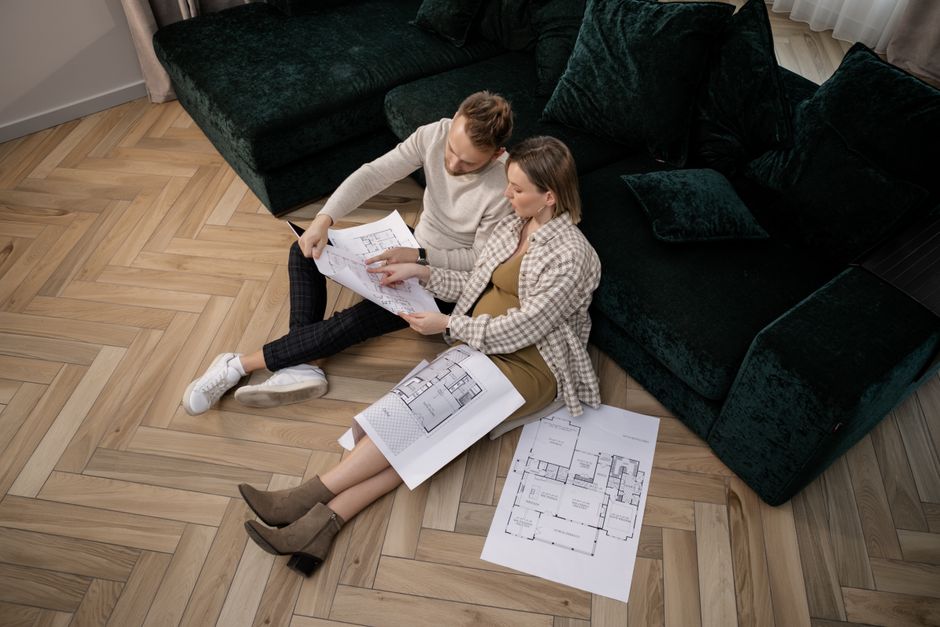
Make a modern living room feel warm by fixing the layout first, then layering low-glare warm light and adding a few high-impact natural textures. Pull seating into a conversation zone, use portable lamps instead of relying on overhead light, and choose wood, fabric, and warm undertones in larger pieces rather than filling every surface with decor.
Why does my living room look nice but not feel cozy?
A living room can look polished but feel cold when its layout, light, and materials send separate signals. The usual pattern is simple: seating is pushed to the walls, the ceiling fixture does all the work, and hard, pale surfaces dominate the visual field. The room has objects, but it has no center of gravity.
Start with the conversation test. Research from Stanford University and the University of California, Berkeley identifies comfortable conversation, circulation, visual balance, alignment, and a focal point as key criteria for living-room layouts. Its guideline places seats roughly 4 to 8 feet apart for normal conversation. That is the useful target: move the sofa or chairs inward enough that people can talk without raising their voices, even if the furniture is no longer pressed against the perimeter.
Weak move: “Keep everything against the wall so the room looks bigger.” Strong move: “Float the seating enough to create one usable zone, then preserve a clear path around it.” The same research notes that pushing large furniture against walls can create functionally ineffective and visually imbalanced arrangements. Empty center space is not automatically spacious; sometimes it is simply disconnected.
Next, choose one focal point. It might be a television, a fireplace, a large artwork, or the most intentional wall in the room. A focal point gives the eye a place to rest, which means you do not need to compensate with more objects on every shelf and tabletop.
How can I make a modern living room warmer without clutter?
Make a modern room warmer by increasing material contrast and visual comfort, not by adding a parade of small accessories. Treat warmth as a material swap: replace or cover a few cool, hard-looking elements with fabric, timber, or other natural texture while keeping the room's clean lines intact.
The evidence supports the edit. Controlled doctoral research from Bilkent University, involving 192 participants, found that timber and fabric were perceived as equally warm and warmer than plasterboard when considered as individual interior materials. The study also found that white reduced the perceived warmth of color pairings. That does not require abandoning a light modern palette. It means a room built mostly from white walls, smooth finishes, and cool gray surfaces benefits from a deliberate counterweight.
Run these changes in order. Stop when the room feels settled; the goal is not to complete every line item.
- Anchor the seating area. Use one substantial rug or a fabric-based soft layer to make the conversation zone read as a destination rather than furniture parked in open space.
- Add one wood note. A wood-toned side table, media unit, or occasional chair has more impact than several tiny wooden ornaments because the material is visible at room scale.
- Change the contact points. Choose fabric pillows, a throw, or upholstered seating where hands and bodies meet the room. This softens a minimal setting without increasing the number of visual decisions.
- Use warm undertones selectively. Let a muted rust, terracotta, or warm beige appear in a textile or artwork instead of repainting every wall. The Bilkent findings show red reads warmer than green, and green warmer than white; use that hierarchy as a direction, not a demand for a red room.
For renters, begin with portable changes: rearrange existing seating, bring in a lamp, add a textile layer, and introduce a movable wood or fabric piece. Those moves address the room's use and sensory balance before a new sofa, built-in storage, or renovation enters the conversation.
| Problem | Low-clutter replacement | Why it works |
|---|---|---|
| Furniture lines every wall | Create a central seating group | Supports conversation and visual balance |
| Many small accessories | One larger wood or fabric element | Adds warmth with fewer objects |
| Cool, flat palette | One textile with a warm undertone | Offsets white and hard surfaces without changing the whole room |
| Bright ceiling-only light | Layer portable and indirect light | Creates usable light without a harsh focal glare |
What lighting makes a living room feel cozy?
Cozy living-room lighting uses layers: lower-level general light for the room, portable task light where people read or write, and indirect accent light that gives the eye a softer destination. One bright overhead fixture tries to do three jobs at once. It usually does none of them well.
The U.S. Department of Energy defines ambient lighting as general illumination, task lighting as light for activities that need more light, and accent lighting as light that draws attention to features or improves aesthetics. That is the practical plan. Keep ambient light modest, then place light where the activity and room architecture need it.
For bulb selection, start with warm 2700-3000 K light. The DOE classifies 2700-3000 K as warm and states that “Warm light is preferred for living spaces because it is more flattering to skin tones and clothing.” The DOE also generally recommends 2700-3600 K for indoor general and task lighting. If you want a clean contemporary look without a blue or clinical cast, 3000 K is a useful middle position.
Use a portable lamp beside the chair or end of the sofa where reading happens. The DOE-sponsored residential-lighting guide specifically says portable lamps are normally appropriate task lights for living-room reading and writing. This is a better fix than raising the brightness of the entire room for one person's book.
Then add indirect light. Wall washing can visually expand a room, while cove lighting can make a ceiling feel higher, according to that same guide. Put television bias lighting or another indirect source behind or near the screen rather than aiming a lamp at it; the DOE notes that glare depends heavily on where fixtures sit relative to viewed objects, including television screens. The replacement behavior is clear: light the wall or surrounding plane, not the viewer's eyes.
Do not use a fixed lamp count as a shortcut. The DOE guide says counts depend on room size, configuration, and the reflectance of light or dark finishes. Use the activity map instead: where do people enter, sit, read, talk, and watch? Each answer tells you whether the room needs general, task, or accent light.
Frequently Asked Questions
How many lamps should a living room have?
There is no universal lamp count. The DOE-sponsored residential-lighting guide says fixture counts must vary with room size, layout, and whether finishes are light or dark. Start with enough layers to cover general use and the activities you actually do, then add a portable lamp where reading or writing happens.
What color temperature is best for living room lighting?
Use warm light in the 2700-3000 K range as a strong starting point for a living room. The U.S. Department of Energy identifies 2700-3000 K as warm and says warm light is preferred for living spaces because it flatters skin tones and clothing. A 3000 K LED with a CRI of 80 or higher also aligns with DOE residential-lighting guidance.
How do I make an open-concept living room feel more inviting?
Give the living area its own job: create a seating group, establish a focal point, and use lighting and material changes to distinguish it from adjacent space. Keep chairs and sofas close enough for comfortable conversation; the Stanford and UC Berkeley layout research uses roughly 4 to 8 feet between seats. This defines a room without adding a physical divider or a collection of extra objects.
Your next move is a 20-minute room drill: remove one unnecessary small object, pull one seat inward, and switch on one warm portable lamp before turning on the ceiling fixture. Then ask one question: does this room now tell people where to sit, what to look at, and how to relax? If not, adjust the layout before buying anything else.