
How Can I Tell if My UK Vinyl Record Is a First Pressing?
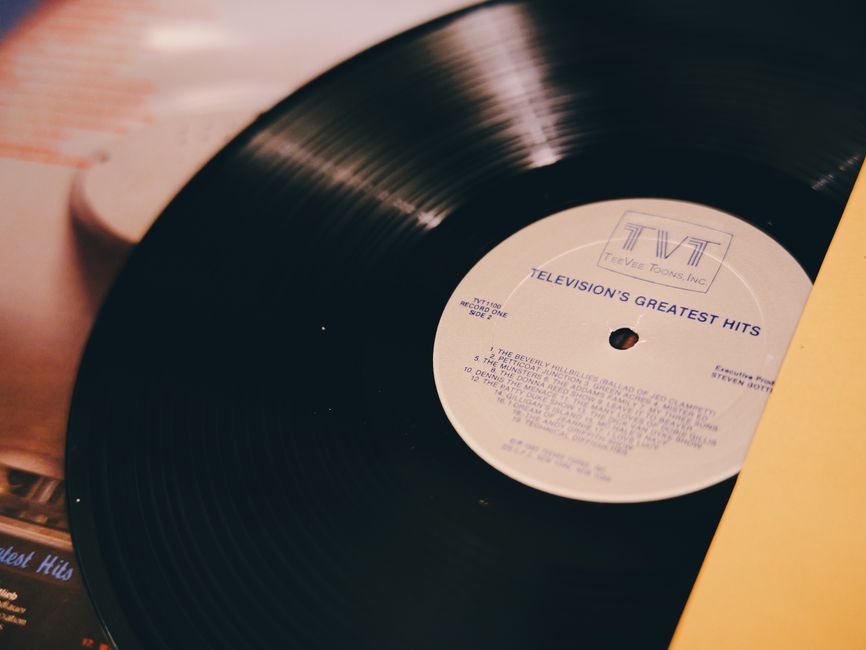
To identify a UK first or early pressing, match the catalogue number, label and sleeve to the complete runout inscription, then compare that evidence with the correct Discogs release and plant history. A low-looking code such as A1 or B1 can show an early cut, but it does not prove the first retail issue by itself. The record has to agree across all of its physical clues.
How can I tell whether my UK vinyl record is a first pressing?
You can tell only by building an evidence chain: catalogue number first, label and sleeve next, then the dead wax on both sides. The fast mistake is to stop at one promising mark. The useful move is to ask whether every component supports the same release.
Start with the jacket. Discogs' record-identification guide says to collect the artist, title, label and catalogue number, including the number on the spine. Write down differences between the front and back cover too. Sleeve wording is a comparison clue, not a verdict.
- Capture the catalogue number. Check the label, spine and back cover. The most prominent release number is commonly repeated across these places.
- Read the labels as a pair. Compare the label name, catalogue number and side designation with a candidate listing. Do not derive a catalogue number from a matrix unless the other evidence supports it.
- Transcribe both runouts in full. Inspect the smooth area between the final groove and label under strong angled light. Copy every stamped or etched group, symbol and visible spacing. Discogs instructs contributors to enter the complete string, using single spaces for larger gaps.
- Compare the whole combination. Use Discogs candidates as a checklist, not a shortcut. A matching title plus one matching code is weak; matching label, catalogue number, sleeve details and runouts is useful.
- Name the result accurately. “Early cut” and “first retail issue” are different claims. If the sleeve differs or the plant evidence conflicts, describe that uncertainty rather than upgrading the record.
This is the two-sided check: examine both sides before making any claim. A record can look tidy on side A and still separate from a candidate pressing on side B.
Use the same discipline when looking at online listings. Ask the seller for clear photographs of both labels, the spine, the back sleeve and each runout. “First press” without those images is a sales description, not identification evidence.
What do A1, B1, A-1U and matrix numbers mean on UK records?
A1, B1 and similar marks usually need to be read as part of a label- and plant-specific manufacturing system, not as a universal UK first-press code. A matrix tracks a record side in manufacturing, while the runout can also carry mastering, studio or plant information.
Discogs' catalogue-number guidance distinguishes the catalogue number from the matrix: a matrix is normally inscribed in the runout and may use a catalogue-derived form plus a side marker. The same runout can include an engineer credit or a pressing-plant identifier. That is why “A1 means first pressing” is too blunt to be safe.
| Mark or clue | What it can tell you | What it cannot prove alone |
|---|---|---|
| A1 or B1 | A side and an early-looking cut designation in the relevant system. | That the assembled retail copy is the first issue. |
| A-1 or B-1 | At CBS Aston Clinton from around 1977, a hand-etched side and cut style could use this form. | The plant, sleeve version or first-sale status without the other evidence. |
| A-1U | A runout string that must be transcribed and compared in full. | A universal “first press” meaning; the supplied sources do not provide one UK-wide decoder for the U suffix. |
| Mother or stamper marks | Plant-stage information that may support a plant match. | An independent first-issue claim. |
The CBS Aston Clinton reference is a practical example. It documents a 12, 3 and 9 o'clock layout from roughly 1970 to 1976, with the catalogue number, side identifier and cut or father number at 12 o'clock. It identifies the 3 o'clock marks as stamper numbers and the 9 o'clock mark as a mother indicator. Around 1977, its stamped matrix changed to a hand-etched legend while retaining that layout.
For Decca-made material, use plant-specific evidence. Kingston RPM's New Malden guide identifies letters from BUCKINGHAM at the 3 o'clock position as a numerical stamper code, with each letter representing a number from 1 to 10. It also advises checking Decca-labelled New Malden records for a straight matrix stamp commonly containing VGMT, a four-digit number, 1 and a mastering-engineer letter.
Do not force that Decca decoder onto EMI, Parlophone, CBS or Phonodisc examples. The supplied research does not establish a single codebook for all of those labels. CHARM's research help makes the larger point: matrix prefixes are company-specific, and take numbers are not always present. Read the system belonging to the record, not a legend copied from an unrelated listing.
Are matrix numbers enough to prove a record is a first press?
No. Matrix numbers are essential evidence, but they are not enough to prove a first press because they record manufacturing history, while a retail issue also depends on the label, sleeve and release context.
Discogs separates a printed label matrix from a Matrix/Runout inscription and says meaningful runout differences involving a company, credit or job number can indicate a unique release. Minor differences may instead be documented as runout variants. That gives you a clean rule: compare both printed and inscribed identifiers, then decide whether the difference is structural or merely variant-level.
The distinction matters especially with older UK issues. The King's College London Decca discography notes that, from 1959, licensed UK recordings were usually marked by adding “-R” to the UK catalogue-number prefix and an “X” at the beginning of the matrix number. A matrix can therefore reflect licensing and regional practice, not simply “first” versus “later.”
Use a red-flag pass before paying a premium. A barcode is one: Discogs says releases with a barcode generally cannot predate 1979, so it deserves scrutiny on a record presented as an older issue. A label that does not align with the runout's claimed plant is another. Kingston RPM specifically notes that a record carrying another company's label was not made at Decca's New Malden plant.
Finally, separate the disc from its packaging. A later or recreated sleeve can alter what the complete item is, even if the vinyl's runout points to an early cut. For collectors displaying records in a shared room, the same principle applies as with making a modern living room warm without clutter: give each object a clear role. Keep identification notes with the record, not in a memory that gets revised after the purchase.
Frequently Asked Questions
How do I use Discogs to identify my exact vinyl pressing?
Start with the artist, title, label and catalogue number, including the number on the spine. Then compare the full runout inscription against candidate releases, preserving the meaningful gaps between groups of characters. If a release lists runout variants, compare the company, credit and job-number elements closely because significant differences can identify a separate release.
What UK label, sleeve and runout details should I compare before buying a rare record?
Compare the catalogue number on the label, back cover and spine; the label wording and design; and every runout marking on both sides. Check whether the sleeve and record tell a consistent story, rather than treating one attractive feature as decisive. A barcode is also a useful chronological check because Discogs says releases with barcodes generally cannot predate 1979.
Can a record with a later sleeve still contain an early pressing?
It can be possible for the physical components to require separate comparison, so a sleeve should not be used as proof on its own. Discogs specifically treats cover discrepancies as information to record, while runout inscriptions may be necessary to determine the pressing. Describe the result precisely: an early disc with a differing sleeve is not automatically a complete first retail issue.
Run this drill before your next purchase: write the catalogue number, label text and complete runout for both sides in one note. Then ask one question: “Which detail would have to change before this stopped being the release I think it is?” That question finds the missing comparison fast.
Sources
- Discogs Community Support: How To Find Information On A Vinyl Record
- Discogs Community Support: Database Guidelines 5: Barcodes & Identifiers
- Discogs Community Support: Database Guidelines 4: Label / Catalog Number
- Discogs: CBS Pressing Plant, Aston Clinton
- Kingston RPM: Pressed in the New Malden Decca Record Factory
- King's College London CHARM: Decca Classical, 1929-2009